
How Much Does A U.s. Senator Make
You’ve seen them on C-SPAN, shaking hands in airports, or—let’s be honest—ducking into a Capitol elevator to avoid a tough question. But have you ever wondered, while you’re ordering a $6 latte, what the paycheck of a U.S. Senator actually looks like?
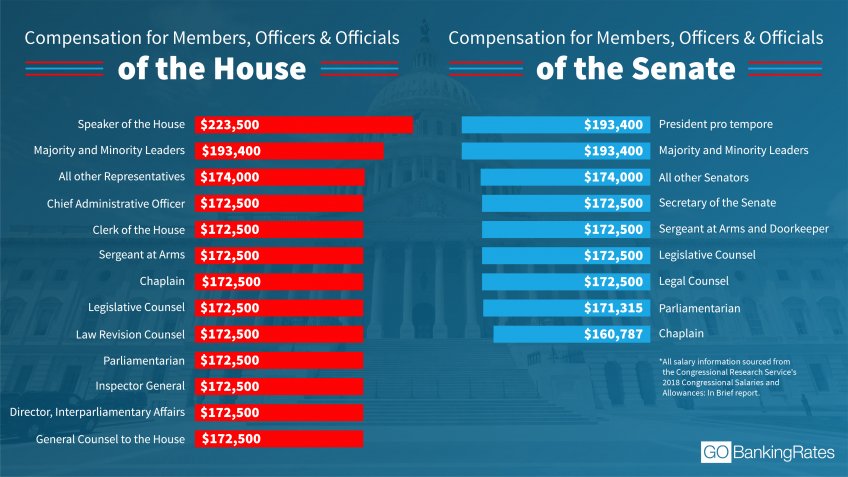
Spoiler: it’s not a billionaire’s club, but it’s not ramen noodles either. The base annual salary for a rank-and-file U.S. Senator is $174,000. That’s as of 2024, and it hasn’t budged since 2009 due to the lack of a cost-of-living adjustment (COLA) that gets blocked like a bad bill.
Let’s put that in perspective. If you’re a tech worker in San Francisco or a mid-level lawyer in New York, $174k might feel like a “nice start.” But for a senator representing 40 million Californians or a farming community in Montana, that number starts to breathe differently. They don’t get to keep all of it, either.
Must Read
Out of that $174,000, senators pay federal income tax, state taxes (if they live in a state with one—looking at you, Texas and Florida), and FICA. Many also voluntarily pay into Social Security, despite the old “federal pension” myth. And yes, they have a pension plan—but it’s tiered, and newer senators get a 401(k)-style Thrift Savings Plan (TSP), just like other feds.
But hold up—the real story is in the perks. Senators receive a hefty allowance for office staff, travel, and official mail (“franking” privileges). That’s why they can send you that “Happy Birthday from Washington” postcard without paying a stamp. The annual office budget runs between $3 million and $5 million per senator, depending on the state’s distance from D.C.

Then there’s the leadership bonus. The Majority Leader, Minority Leader, and the President Pro Tempore pull in $193,400 annually. The Vice President—who serves as President of the Senate—makes $284,600. But don’t feel too bad for the freshmen who make $174k: they get a tax deduction for maintaining a second home in D.C. because, well, they have to live in two places.
Let’s get cultural for a second. Think of Senator Elizabeth Warren, who famously joked that she “paid for her college with $50 a month from a part-time job.” She and many others point out that $174k is more than 90% of American households earn. Meanwhile, Senator Bernie Sanders, a self-described “democratic socialist,” has a net worth that’s actually below average for the chamber—around $700,000. The Senate’s average net worth? Over $13 million.
So, what’s the practical takeaway? If you’re an idealist thinking of running for office, know this: you can live on $174k in D.C., but you’ll likely rent a modest apartment in Arlington or a row house on Capitol Hill. You won’t be collecting Porsches, but you’ll never have to check the price on a menu. And if you’re a political junkie, remember that many senators leave office and instantly triple their income as lobbyists or board members—so the real money comes after the gavel drops.

Fun fact: The first senators in 1789 earned $6 per day when Congress was in session. That’s about $200 in today’s money—but they had to cover their own horses and candles. By 1816, they demanded a salary of $1,500 per year, which caused a public uproar so loud that Congress repealed it the next year. History repeats itself, doesn’t it?
Another gem: The only pay raise since 2009 was a $900 automatic increase in 2020 that they immediately voted to cancel. Why? Because raising your own salary during a pandemic is optics poison. So they’ve been working for free—well, for the same 2019 number—ever since.

Now, here’s the part that connects to your life. The next time you see a senator on TV, ask yourself: would you take that job for $174k? You’d get a key to the city, a private gym in the Capitol, a subsidized cafeteria with $3.50 burgers, and unlimited access to the Library of Congress. But you’d also face 24/7 media scrutiny, relentless fundraising calls, and a schedule that makes a startup founder look relaxed.
In your own life, that works the same way. Whether you earn $40k or $400k, the real question is: what are you trading? Senators trade privacy for purpose. You might trade a commute for flexibility. Or a salary for passion. The number on the paycheck is just the headline—the story is in the fine print of your daily trade-offs.
So, yes, $174,000 is a lot of money. It’s also less than the CEO of Dick’s Sporting Goods makes in a week. But maybe it’s a useful reminder: the most important salary you’ll ever negotiate isn’t the one with the government—it’s the one between your ambition and your peace.